 Charles Schwab
 Fidelity
 Interactive Brokers
 E*TRADE
 Webull
 Robinhood
 TradeStation
 tastytrade
 eToro
 Trading 212
 Interactive Investor
 IG
 Interactive Brokers
 XTB
 Hargreaves Lansdown
 Saxo
 Charles Stanley Direct
 CIBC Investor's Edge
 Interactive Brokers
 Moomoo
 Questrade
 Qtrade
 TD Direct Investing
 Wealthsimple
 Finviz
 Stock Rover
 Seeking Alpha
 StockHero
 TipRanks
 TrendSpider
 Trade Ideas
 TraderSync
 TradingView
 Tradervue
 TradeZella
Best UK Trading Platforms for Beginners of 2026

Written by Elizabeth Anderson
Lead Writer for the UK

Fact-checked by Steven Hatzakis
Director of Online Broker Research

Edited by John Bringans
Managing Editor
Elizabeth AndersonLead Writer for the UK
Elizabeth Anderson is the lead writer and researcher for U.K. content on StockBrokers.com. She has been a financial journalist for more than a decade and has written for major publications including BBC, The Times, and Bloomberg.

 Why you can trust us
Led by Elizabeth Anderson, Lead Writer and Researcher, the StockBrokers.com research team for the U.K. collects data and tests products on an ongoing basis. We review the tools and features most important to U.K. investors – including beginners, casual investors, passive investors, and active traders.
We collect and track data on trading charges, fees, and interest rates to make it easier to understand the cost of investing in the U.K. We analyze a wide range of savings and investment offerings, like ISAs, SIPPs, investment portfolios, pensions, and active trading accounts. We hand-collect and audit data across more than 50 variables in our coverage of the best U.K. investment platforms.
Our researchers open personal brokerage accounts and test all available platforms on desktop, web, and mobile for each broker reviewed on StockBrokers.com. Learn more about how we test.
Trading 212 is the best U.K. trading platform for beginners overall, while InvestEngine stands out for buy-and-hold ETF portfolios, Freetrade for commission-free investing, Lloyds Bank for simple flat fees, and IG for educational resources.
As a beginner investor, you may be overwhelmed by the choice of platforms and investments out there; there are around 20 investment platforms in the U.K. and several thousand investment choices spanning stocks and shares, exchange-traded funds (ETFs), mutual funds, and investment trusts.
I've reviewed 16 of the biggest investment platforms in the U.K. this year, gathering nearly a thousand data points across dozens of variables in the process. There's no single "perfect" choice: the best trading platform for you will depend on your budget, how hands-on you want to be, and whether you prefer a simple app or a more advanced desktop experience. Below, I'll walk you through my top picks, explain what sets them apart, and help you choose a platform that makes getting started as straightforward as possible.
Best UK Trading Platforms for Beginners
The platforms below consistently deliver the strongest overall experience for new investors, balancing low costs, ease of use, educational support, and reliable mobile apps, all while operating under FCA regulation.
- Minimum Deposit: £1
- Share Trading: 0-9 Deals/ Month: £0
- ISA: Yes
- SIPP: Yes
Trading 212 offers fractional shares, meaning you can commit less money when starting out. You can open an account with just £1. New investors will likely want the ‘Invest’ or ISA account rather than the high-risk CFD account. Read full review
- Tax-free investing via an ISA.
- SIPP with no platform fee and no dealing fees.
- High interest rate on cash balances.
- User-friendly mobile app with practice accounts available.
- Commission-free stock and ETF trading, including fractional shares.
- SIPP doesn't support drawdown or employer contributions.
- Limited educational materials when researching investments.
- Only offers stocks and ETFs. Doesn't offer mutual funds, gilts, or corporate bonds.
- Minimum Deposit: £100
- Share Trading: 0-9 Deals/ Month: N/A
- ISA: Yes
- SIPP: Yes
InvestEngine specialises in ETFs, a type of low-cost investment fund allowing you to invest in a wide range of shares, bonds, gold, and more. InvestEngine does not charge any account fees for DIY investors, but there is a small 0.25% charge for its managed funds.
- 800+ global ETFs.
- No platform fees or trading commission for the DIY portfolio.
- Managed portfolios are available for just 0.25% annual fee.
- Supports ISA and SIPP tax wrappers.
- Unique feature of multiple, named investment pots.
- Limited to ETF investing only.
- Doesn’t offer junior ISAs or junior SIPPs.
- Uninvested cash doesn’t earn interest.
- Trades are executed only once a day.
- Transfers out must be in cash.
- Minimum Deposit: £1
- Share Trading: 0-9 Deals/ Month: £0
- ISA: Yes
- SIPP: Yes
Overall Freetrade is a great platform to help you get to grips with investing. Costs are low, and its user-friendly mobile app offers great investment inspiration. Sophisticated investors, however, may find that other platforms offer a wider range of investment options and tools. Read full review
- Commission-free trading keeps costs low for beginners.
- Fractional U.S. shares let you invest with just a few pounds.
- User-friendly mobile app makes stock discovery simple and engaging.
- Missing some core investments like corporate bonds.
- Minimal research tools makes it tough for deeper analysis.
- Minimum Deposit: £1
- Share Trading: 0-9 Deals/ Month: £9.50
- ISA: Yes
- SIPP: Yes
Lloyds Bank is a U.K. investment platform best known for its simple, low-cost investing options, support for ISAs and SIPPs, and appeal to long-term, hands-off investors. Read full review
- Wide range of investments, including bonds and mutual funds.
- Can invest via ISA, SIPP, or taxable account.
- Flat £36 fee is great value for larger portfolios.
- No trading fee for U.S. shares and free regular investing.
- Difficult and time-consuming to open an account.
- £9.50 per trade for U.K. stocks is expensive.
- Very limited tools and research.
- No interest paid on uninvested cash.
- Minimum Deposit: £1
- Share Trading: 0-9 Deals/ Month: £0
- ISA: Yes
- SIPP: Yes
IG is an investment platform aimed at experienced investors looking to make frequent trades on the stock market, with thousands of shares, trusts and ETFs to trade. It offers a comprehensive and easy-to-use trading platform that is used by both private and professional investors. Read full review
- Trade 13,000+ shares, trusts, and 3,000 ETFs with £0 commission.
- Pays 3.75% interest on uninvested cash balances.
- Invest via an ISA or SIPP.
- No mutual funds, bonds, or demo account for share trading.
- Chart tools are limited unless on Pro or £30/month plan.
Your capital is at risk.
1. Trading 212 - Best UK trading platform for beginners
I've found Trading 212 to be a good choice for investors who want to pay in small amounts or who are new to share trading. It's free to trade, you can invest through a tax-free ISA, and the mobile app is easy to use.
Investment choices. The Trading 212 trading platform gives you access to thousands of global stocks and ETFs through the Invest or ISA accounts. You can also invest from as little as £1 and can buy fractional shares, which means you don't have to own a share in full. For example, you can invest a few pounds in Apple without having to pay the full share price.
Elizabeth's expert take
"Trading 212 also offers CFD products, which are much higher risk. Sometimes new investors won't really understand what a CFD is, and the difference between these and general direct stock or ETF investing. They are still prominent on the app, and a beginner should treat them with caution as a risky asset."
Elizabeth Anderson
Lead Writer for the UK
Fees. You'll pay 0.15% in foreign exchange fees if you're buying shares in companies listed overseas, and another 0.15% when you sell them. Buying a U.K.-listed share carries 0.5% stamp duty, which every platform passes on. There are otherwise no trading charges or management fees, so you won't be charged when withdrawing from your account and there are no inactivity fees.
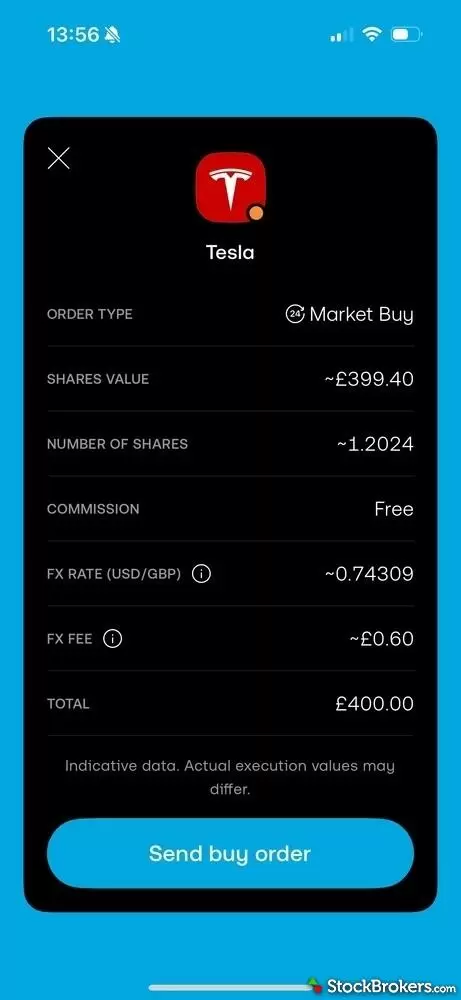
Trading 212 does not charge commission on trades. It charges a 0.15% FX fee when buying shares in companies listed overseas.
Cash interest. Another benefit of Trading 212 is that it pays generous interest on uninvested cash and through a standalone cash ISA. Even as you familiarise yourself with the platform and consider your investment options before making the plunge into buying stocks, you'll continue earning interest on cash held within your account. Rates on uninvested cash are subject to change.
2. InvestEngine - Best for buy-and-hold ETF portfolios
InvestEngine is best for beginners and long-term investors who want an ultra-low-cost, ETF-only platform and are comfortable with a “buy-and-hold” approach rather than frequent trading. It’s particularly well-suited for anyone building a diversified portfolio through global ETFs inside a Stocks & Shares ISA or SIPP, especially if keeping platform charges close to zero is a priority.
Fees and platform: InvestEngine’s biggest strength is its fee structure: DIY investors pay no platform fee and no dealing commission, making it one of the cheapest platforms for ETFs in the U.K. You can choose from 800+ ETFs, and it’s easy to filter by themes, regions, or provider, which makes portfolio building accessible even if you’re new to investing. For investors who want more guidance, InvestEngine also offers managed portfolios for 0.25% annually, though these are currently unavailable to new customers while changes are being made.
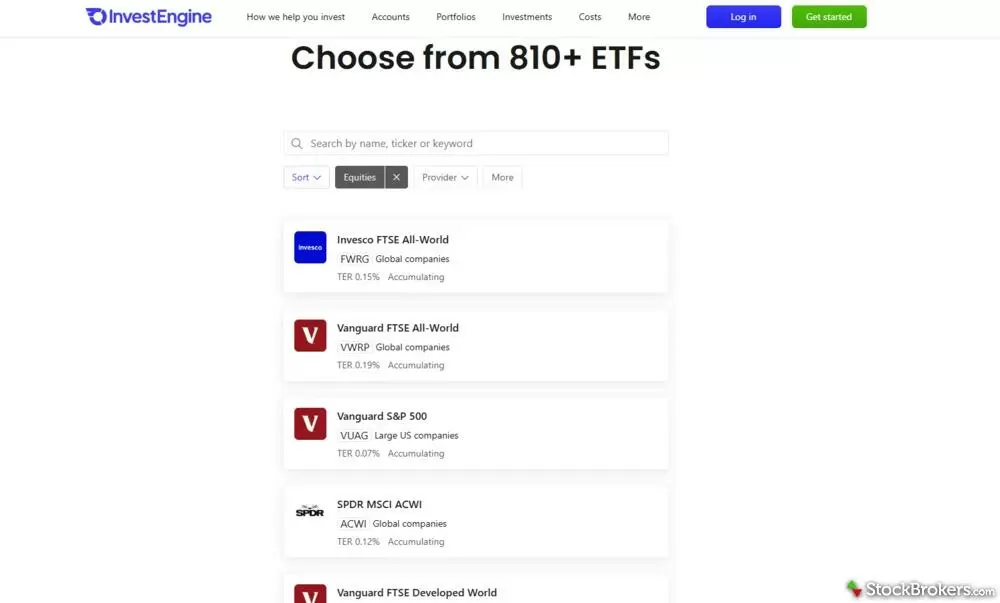
InvestEngine offers access to more than 800 ETFs, giving investors exposure across equities, bonds, and some commodities.
Trading: That said, InvestEngine is not designed for active traders. Trades are executed once per day, meaning you can’t place real-time orders or react quickly to market moves, a major limitation if timing and intraday pricing matter to you. It’s also an ETF-only platform, so you won’t find individual stocks, funds, investment trusts, gilts, or crypto.
Still, for beginners focused on long-term investing, InvestEngine offers one of the cleanest and lowest-cost ways to invest tax-efficiently, and I especially like its ability to create multiple named “pots” within the same account, a simple feature that makes it easier to stay organised around different goals.
3. Freetrade - Commission-free investing
Freetrade is best suited for beginner investors who want a simple, app-first way to start building a portfolio with minimal friction and no dealing commissions. With a £1 minimum deposit and support for fractional U.S. shares, it’s an accessible platform for learning how the stock market works without committing much capital upfront.
Ease of use: Freetrade's real strength is its ease of use. The mobile app is clean and intuitive, and discovery tools, such as themed stock lists and popular investments, make it easy for beginners to explore markets. Freetrade also offers a Stocks & Shares ISA and a SIPP, which adds flexibility for tax-efficient investing and long-term retirement planning, especially for users who want everything in one place.
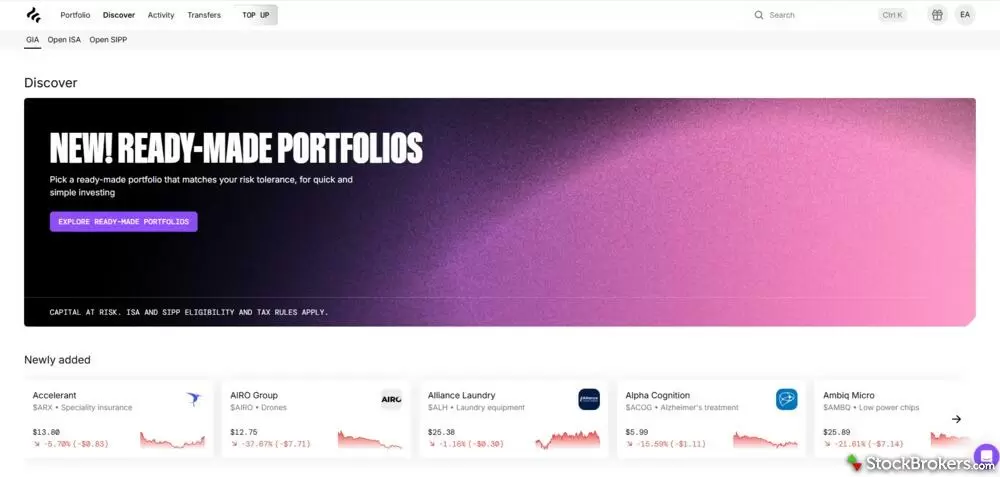
Freetrade offers a free ISA and a wide range of investments that are easy to find in the mobile app or on the web platform.
Fees: Costs can rise depending on the account tier you choose. The ISA, SIPP, mutual funds, and gilts are now all available on the free Basic plan. What still sits behind the paid Standard and Plus tiers is lower FX fees and higher interest on cash, and the Basic plan's 0.99% FX fee is higher than some competitors charge. Research tools are also relatively limited, and the lack of charting features on the platform will frustrate investors who want deeper analysis.
Overall, Freetrade is a strong starter trading platform for hands-off investing in shares and ETFs, but those looking for robust research, advanced tools, or broader investment choice may eventually outgrow it.
4. Lloyds Bank - Simple flat fees
Lloyds Share Dealing is best suited for long-term, hands-off investors who want simple investing with predictable, low fees, especially if they already bank with Lloyds. The platform offers a strong range of investments, including 3,000+ funds, ETFs, shares, and bonds, plus ISA, SIPP, and general accounts, along with ready-made portfolios if you prefer a more guided approach.
Platform and portfolios: The biggest strength at Lloyds is cost structure for larger portfolios. Its annual platform fee is a flat £36 per year, which can be good value versus percentage-based platforms once your portfolio grows. It also offers free regular investing, and international share trades are commission-free (though a 1% FX fee still applies), which helps keep ongoing costs down for investors who contribute consistently.
Fees: Lloyds is not designed for frequent traders. One-off U.K. share dealing still costs £9.50 per trade, which is high compared to commission-free trading platforms like Trading 212, XTB, or Freetrade. Tools and research are also limited inside the share dealing platform, and Lloyds doesn't pay interest on uninvested cash, both common drawbacks compared with modern trading platforms.
Overall, Lloyds is a reliable choice for straightforward investing through a familiar bank, but if you're an active trader or research-driven investor, you'll likely want a more advanced trading platform.
5. IG - Best educational app for beginners
IG is a strong choice for beginners who want to learn the ropes of investing with the support of a new and easy-to-use mobile app and award-winning educational resources. While IG has long been a top platform for advanced traders, the launch of IG Invest, its new beginner-friendly app, puts IG firmly on the radar for first-time investors. Two things to know upfront. IG doesn’t offer fractional shares, so you buy whole shares only, and CFDs and spread betting are pushed hard alongside the investing products.
Investment choices: IG offers a broad selection of shares and ETFs, with access to more than 13,000 stocks and over 3,000 ETFs across global markets. You can invest through an ISA, a Junior ISA, or a SIPP, though the SIPP is run by a third party and costs £210 a year. You can buy individual shares or use Smart Portfolios, IG’s ready-made investments built from BlackRock’s iShares ETFs. There are three, covering different risk appetites, and they cost 0.5% a year capped at £250. They’re on the basic side next to the ready-made ranges at Hargreaves Lansdown or AJ Bell.
Fees: IG now charges £0 commission on share trading, bringing its trading platform in line with competitors like Trading 212 and XTB. Other costs include a 0.7% FX conversion fee when buying overseas shares, and charges on certain products such as CFDs or the 0.5% Smart Portfolio fee. For beginners, these costs are less visible than a headline commission but can still affect returns over time, especially if you trade frequently or invest internationally.
Cash interest: IG pays 3.75% interest on uninvested cash, on balances up to £100,000 per client. To qualify you’ll need to hold an open position, make at least one trade during the month, or hold a funded Smart Portfolio.
Mobile app: The IG Invest app simplifies the investing experience for beginners. It includes straightforward trading tools, market news, and a ‘lessons’ section, which breaks down investment basics into digestible slides, from how ETFs work to how much to consider investing based on your income. There’s also a compound calculator. I tested it with £1,000 up front, £100 a month for 10 years and 5% annual growth, and it returned £17,175.24.
Other trading platforms I tested
6. AJ Bell - Retirement investing
AJ Bell offers everything from shares and investment trusts to mutual funds and bonds. In addition to a standard investment ISA, AJ Bell is one of the few investment platforms in the UK to offer a Lifetime ISA for investors saving for their first home or retirement. If you plan to invest in shares or ETFs, be mindful of fees that can take a large chunk out of your investment if you are only buying a small amount. AJ Bell charges £5 each time you buy or sell shares, but there are no dealing charges on regular investments. Management fees are also charged, capped at £3.50 per month on shares.
7. Interactive Investor - Best for large portfolios
Interactive Investor (ii) is best for hands-on investors with medium-to-large portfolios who want predictable costs and a deep investment lineup. Its flat monthly pricing can work out cheaper than percentage-based fees once your portfolio grows, and it supports ISAs and SIPPs alongside shares, ETFs, funds, and bonds. The web platform is strong for research and charting, but ii can be pricey for smaller accounts, and it still charges £3.99 per fund trade.
8. Interactive Brokers - Global market investing
Interactive Brokers (IBKR) is best for experienced investors and frequent traders who want deep global market access and low costs. You can trade across 90+ markets with strong mobile and web tools, plus very low FX fees (about 0.03%) and fractional shares from $1. However, the platform can feel complex for beginners, and its ISA comes with a £3/month minimum activity fee unless you generate at least that much in trading commissions.
9. XTB - Commission-free share trading
XTB is best for fee-conscious beginners who want a free ISA and an all-in-one investing app. You can trade stocks and ETFs commission-free (up to €100,000/month) and earn interest on uninvested GBP cash (around 4%) with no balance cap and no trading requirement, which is unusual among brokers that pay cash interest. The main drawback is usability. Because XTB still caters heavily to CFD traders, the platform can feel cluttered and confusing, and it doesn’t offer mutual funds, bonds, or a SIPP.
10. Hargreaves Lansdown - Best for long-term investors
Hargreaves Lansdown is best for all-in-one investing, especially ISAs and family accounts. It offers one of the widest investment selections in the U.K., plus strong guidance, ready-made portfolios, and standout wrappers like Junior ISAs and Lifetime ISAs. The trade-off is cost: one-off share and ETF dealing is £11.95 per trade, which can be expensive for small, infrequent investors. Regular investing helps reduce dealing fees to £0.
Compare the best UK trading platforms for beginners
The table below highlights the key differences between our top-rated U.K. trading platforms for beginners, including overall rating, account types supported, and share trading fees.
| Company | Overall Rating | ISA | SIPP | Share Trading: 0-9 Deals/ Month |
 Trading 212 |
|
Yes | Yes | £0 |
 InvestEngine |
|
Yes | Yes | N/A |
 Freetrade |
|
Yes | Yes | £0 |
 Lloyds Bank |
|
Yes | Yes | £9.50 |
 IG UK |
|
Yes | Yes | £0 |
Popular Guides
The best UK mobile trading apps appeal to all levels of trading skill — beginner, active trader, and longer-term investor. Check out our top picks here.
Elizabeth Anderson September 01, 2026
The best U.K. day trading platforms for 2026, tested and ranked. Compare Interactive Brokers, Saxo, IG, XTB and Trading 212 on charting, speed and fees.
Elizabeth Anderson August 21, 2026
Compare the best investment platforms in the UK with detailed information on their features, fees, and investment options.
Elizabeth Anderson October 05, 2026Popular Stock Broker Reviews
Review Lloyds’ investing platform, ISA fees, SIPP costs, and investment options. See if Lloyds is the right low-cost choice for your portfolio.
Elizabeth Anderson June 01, 2026
Explore Halifax Share Dealing’s flat fees, ISA options, and ready-made portfolios. Find out whether Halifax offers good value for your investing style.
Elizabeth Anderson June 01, 2026
Capital.com is a U.K. broker primarily known for CFDs (contracts for difference) and spread betting. While it previously offered the chance to buy and sell shares commission-free, you can no longer buy shares directly through Capital.com. Trading is limited to an unleveraged CFD account.
Elizabeth Anderson May 04, 2026
Robinhood is great for trading UK stocks and for beginners who want to learn the basics without worrying about small trades being swallowed up by hefty fees.
Elizabeth Anderson June 01, 2026
We tested Interactive Brokers U.K. for 2026. More than 90 markets and a 0.03% FX fee suit active traders. ISA investors who rarely trade pay £3 a month.
Elizabeth Anderson October 02, 2026
IG review 2026. No platform fee, no dealing commission, and 3.75% on uninvested cash. Strong for confident investors, though there are no fractional shares.
Elizabeth Anderson September 01, 2026
AJ Bell review 2026: Explore ISAs, SIPPs, fees, app features, and ratings. Find out if AJ Bell is the best UK investing platform today.
Elizabeth Anderson June 01, 2026
Barclays Smart Investor offers a wide range of investments and accounts. See fees, features, and whether it's worth it in our 2026 review.
Elizabeth Anderson June 01, 2026
Revolut offers easy app-based investing with commission-free trades and a new stocks & shares ISA. See whether Revolut is the right platform for your portfolio.
Elizabeth Anderson June 01, 2026
eToro review UK 2026: we tested fees, the app, ISA, crypto and safety first-hand. See pros, cons and who eToro is best for before you sign up.
Elizabeth Anderson June 01, 2026
Webull has a good app, desktop platform, and low fees, but is limited in the UK by offering only US stocks with no products offered from other markets.
Elizabeth Anderson May 04, 2026
XTB’s low fees and solid education make it ideal for new investors. Learn more about its features and drawbacks in our full XTB review.
Elizabeth Anderson June 01, 2026
Trading 212 Review 2026: no platform fee, no dealing commission, and 0.15% FX. We tested the ISA, cash ISA, and new SIPP. See where the U.K. app falls short.
Elizabeth Anderson August 21, 2026
Trade U.K. and U.S. shares commission-free with CMC Invest. Backed by CMC Markets. Explore if it’s the right app for your portfolio today.
Elizabeth Anderson June 01, 2026
Review Vanguard’s low fees, ISA and SIPP options, and simple long-term investing funds. See if Vanguard is the right low-cost platform for your portfolio.
Elizabeth Anderson June 01, 2026
Saxo UK review: Compare ISAs, fees, and trading tools. Discover if Saxo’s global platform is right for your investing goals today.
Elizabeth Anderson June 01, 2026
Review Freetrade’s fees, ISA costs, and investment options. Learn whether Freetrade’s commission-free trading is the right choice for your portfolio.
Elizabeth Anderson August 26, 2026
Our hands-on Hargreaves Lansdown review after testing 16 UK platforms — fees, ISA and SIPP costs, app, and who HL is best for in 2026.
Elizabeth Anderson June 01, 2026
Charles Stanley Direct is an online investment platform where you can invest in a wide range of products, including stocks and ETFs, using various accounts like tax-advantaged ISAs and SIPPs.
Elizabeth Anderson June 01, 2026
Interactive Investor offers flat fees, wide investment choice, and strong research tools. See who ii is best for and whether it’s the right platform for you.
Elizabeth Anderson October 05, 2026More Guides
- Best Lifetime ISAs of 2026
- 5 Best Demo Trading Accounts in the UK for 2026
- Best Stocks and Shares ISAs for 2026
- Best Junior SIPPs for 2026
- Best Cash ISA Accounts & Rates for 2026
- Best SIPP Providers of 2026
- Best Online Brokers for Crypto Trading in 2026
About the Editorial Team
Elizabeth Anderson, lead writer and researcher for the U.K. market, has been a financial journalist for more than a decade. In addition to her work with StockBrokers.com, she has written extensively for major publications including BBC, The Times, and Bloomberg. A keen investor herself, she is passionate about helping people understand finance and investing.
Steven Hatzakis is the Global Director of Research for ForexBrokers.com. Steven previously served as an Editor for Finance Magnates, where he authored over 1,000 published articles about the online finance industry. Steven is an active fintech and crypto industry researcher and advises blockchain companies at the board level. Over the past 20 years, Steven has held numerous positions within the international forex markets, from writing to consulting to serving as a registered commodity futures representative.
John Bringans is the Managing Editor of StockBrokers.com. An experienced media professional, John has a decade of editorial experience with a background that includes key leadership roles at global newsroom outlets. He holds a Bachelor’s Degree in English Literature from San Francisco State University, and conducts research on forex and the financial services industry while assisting in the production of content.